How We Made Our Games Playable in Four Languages: Japanese, English, Spanish and Portuguese
IKA LAB's games and this website can be enjoyed in four languages: Japanese, English, Spanish and Portuguese. We're a small studio, but from the very start, we've made our games with players all over the world in mind.
Why four languages?
Games you can play in a phone's browser can reach people across borders right away. Since that's possible, we wanted people in many countries—not just Japan—to play them.
English, first of all, is the language the most people can read. Spanish and Portuguese are spoken in many countries, in Latin America, Europe and beyond. By offering these four, we can help lots of people feel, "I can play this in my own language."
Automatically matching your language
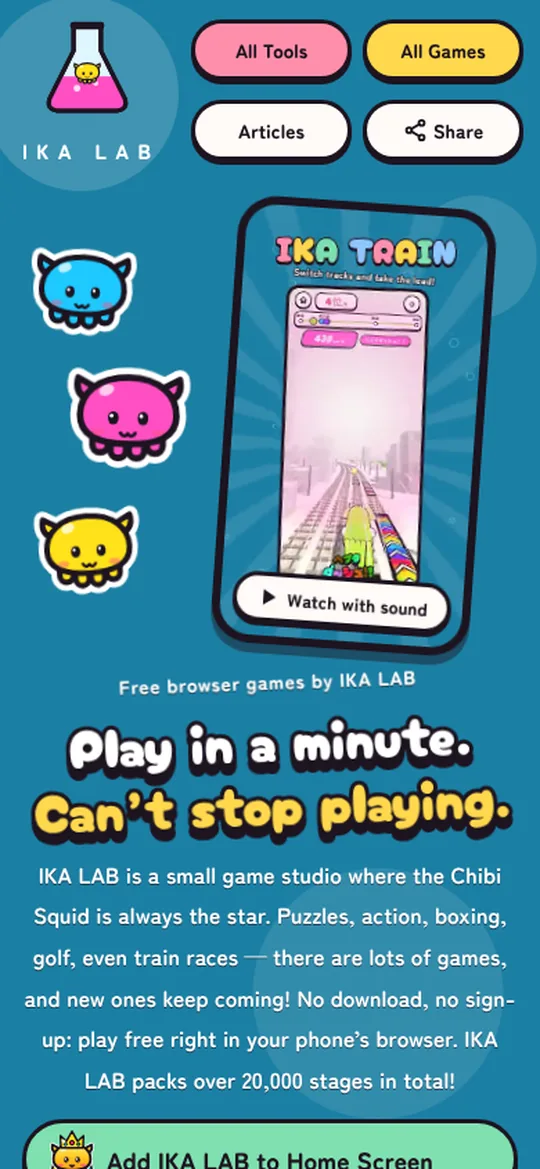
Our website checks the language of your browser and automatically shows the page in Japanese, English, Spanish or Portuguese. If your language isn't one of these four, it shows the English page. You can switch anytime using the globe icon at the very bottom of the page. Your choice is remembered the next time you visit.
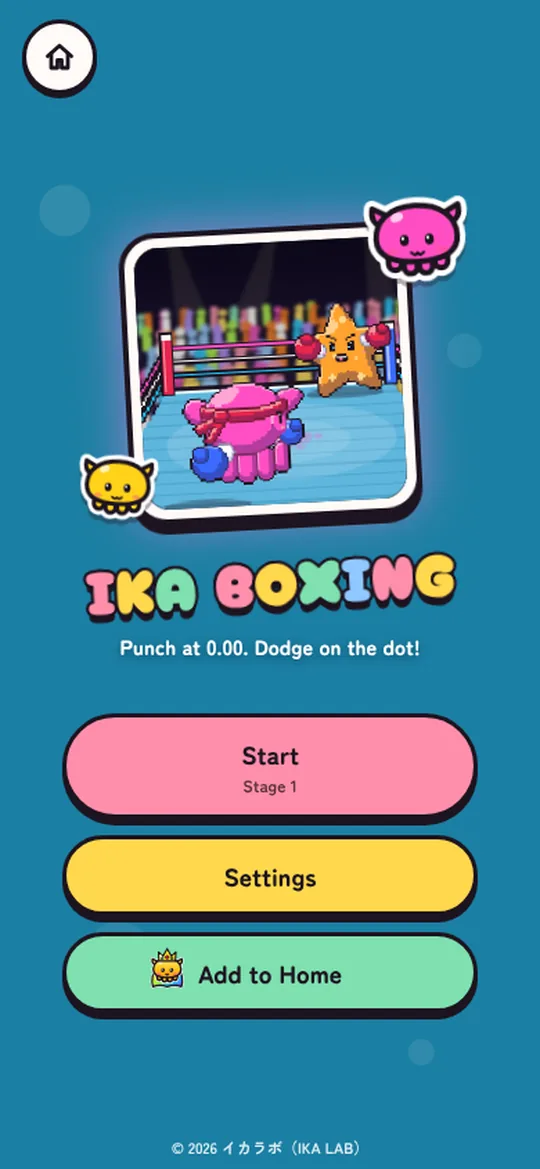
The games work the same way: what's on screen changes to match your browser's language. You can also choose a different one yourself in the settings.
English titles for our games
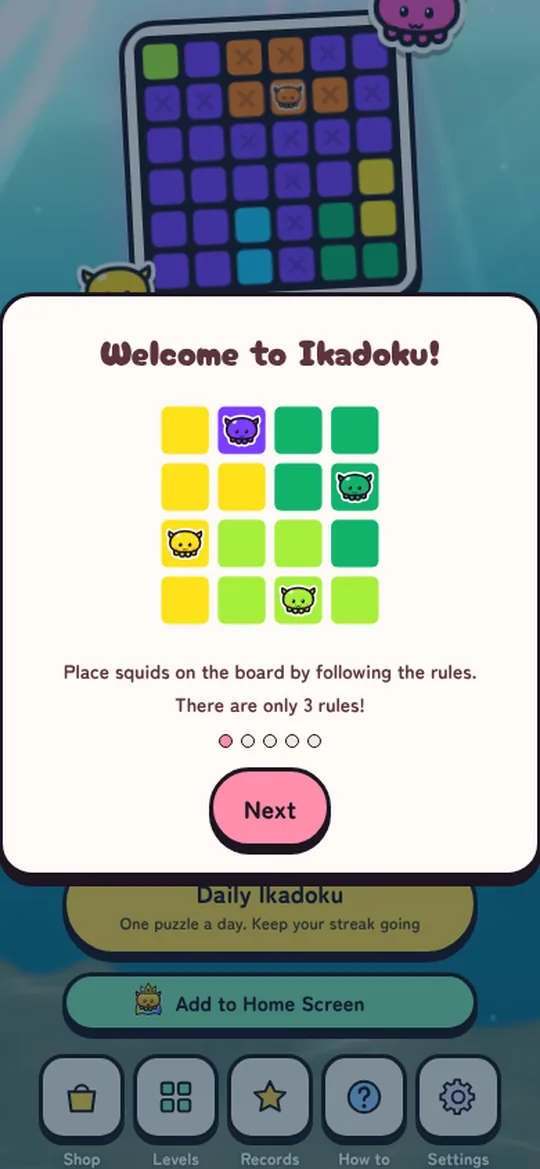
In addition to the Japanese name, every game has an English title. Most combine "IKA" with an English word—for example, イカドク is "IKADOKU" and イカボクシング is "IKA BOXING." We use these English titles on the Spanish and Portuguese pages, too.
On the other hand, the logo on our website is the same on every language's page: a Chibi Squid in a flask with "IKA LAB" in English letters. The katakana "イカラボ" logo appears on the launch screen when you open a game, and on our wallpapers. As the face of IKA LAB, we want it to look the same wherever you see it.
What we call Chibi Squid
Our star, ちびイカ, is called "Chibi Squid" in English, "Mini Calamar" in Spanish and "Mini Lulinha" in Portuguese.
When we translate, we don't just swap words. We care about whether things sound natural and cute in each language. For our praise word "Squid-cool!" too, we come up with a fun way to say it in each language.
Paying attention to the letters, too
When the language changes, the length of a sentence changes too, even if the meaning is the same. Spanish and Portuguese in particular are often longer than Japanese. To make sure text doesn't spill out of buttons or cards, we take screenshots in each language and check.
Some of the languages we're thinking of adding use letters with marks, like ą and ř. The round font we use now doesn't include those letters, so we've already added a system to every game that shows only the missing letters in another round font with a similar shape.
Reaching even more people
Adding languages takes work, but it's a way to greatly change how many people can play. We'd like to keep adding more languages while listening to the voices of the people who play our games.