How an IKA LAB Game Is Made: Meetings, a 10-Stage Prototype, the Full Build and Checking Everything
At IKA LAB, every game is made in the same order. We don't just jump in on a whim. First comes research and meetings, then a small prototype, then the full build once the prototype gets the OK, and finally a check of everything. In this article, we'll walk you through that process step by step.
Step 1: Research and meetings
First, we study the genre of the game we want to make. How is it played? What kinds of mechanics (gimmicks) does it have? How quickly does it get harder?
Then team members with different roles share their ideas. One studies what's great about the genre, one thinks up IKA LAB-style twists and ways to make the most of Chibi Squid, one checks whether first-time players might get stuck, and one is the "mischievous tester," who deliberately hunts for boring parts and sneaky ways to solve things. When opinions differ, we compare the reasons and decide.
Step 2: Just 10 stages to start
Based on what we decided in the meeting, we first make just 10 playable stages. The look follows the Common Rules, and the star is Chibi Squid.
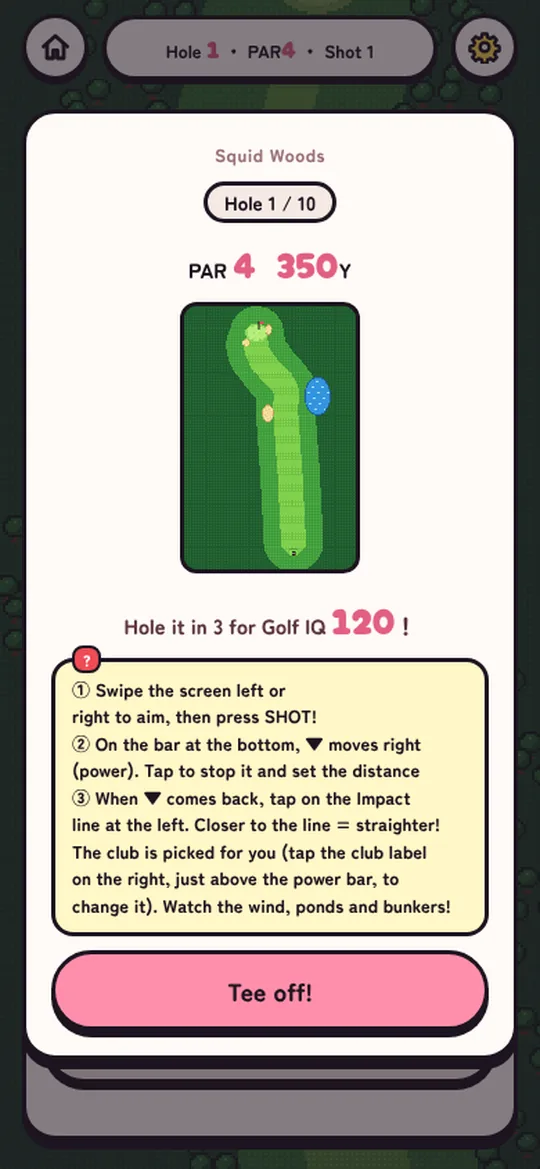
We actually play these 10 stages on a phone and fix things like "this part is confusing" or "it would feel better if it were faster." We don't add more stages until it gets the OK. If the game doesn't feel good from the start, simply adding more stages won't make it fun.
Step 3: Building the real stages
Once the prototype gets the OK, we build the real stages. The basic setup is three difficulties—Easy, Normal and Hard—with the stages in each one arranged to get gradually harder. Depending on the game, we may prepare many more stages, or make one single path without separate difficulties.
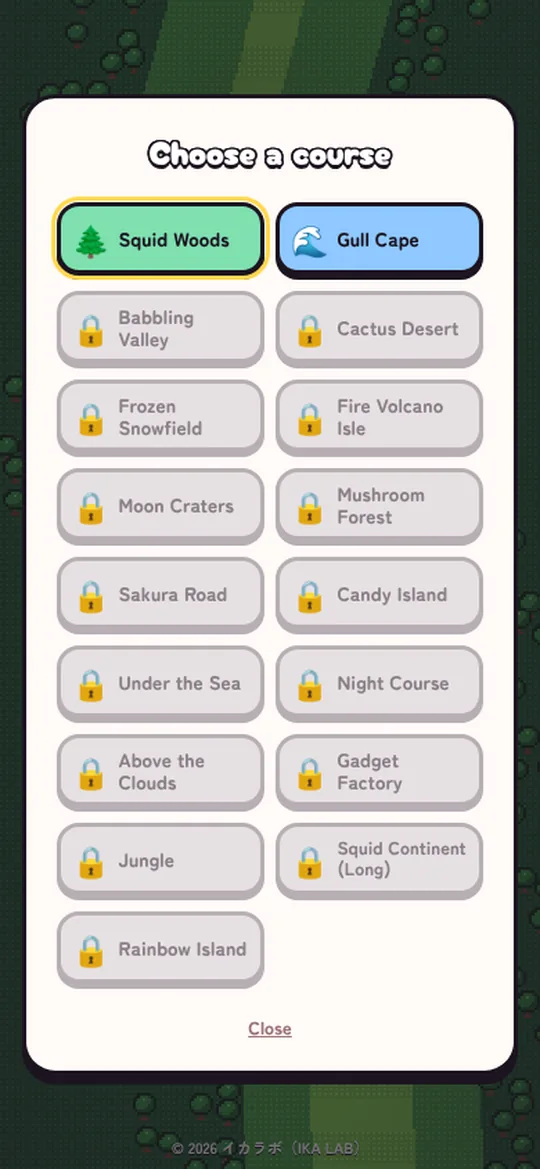
New mechanics are introduced little by little, in the order decided at the meeting. The first time one appears, a speech bubble explains it. Sometimes we generate stages with a program. When we do, the rule is that every single one gets checked in the next step.
Step 4: Checking every stage
Once the stages are ready, we have an "auto-solver" program solve every single one, without exception. If even one stage can't be solved, we remake it.
For puzzles, we also check that there's only one answer. If there are many possible answers, you lose the clues you need to reason it out, and it becomes harder to solve. We also check that no two stages have the same layout and that the difficulty order makes sense.
A check by fresh eyes
The final check is done by someone other than the person who made the game. Does it run smoothly from the startup screen to the title, the game, the clear and the next stage? Is the first mistake safe? Do the clear ink, the praise words and the sound effects show up properly? Does the sound stop when the volume is set to 0? Is your progress still there after you close the page and open it again?
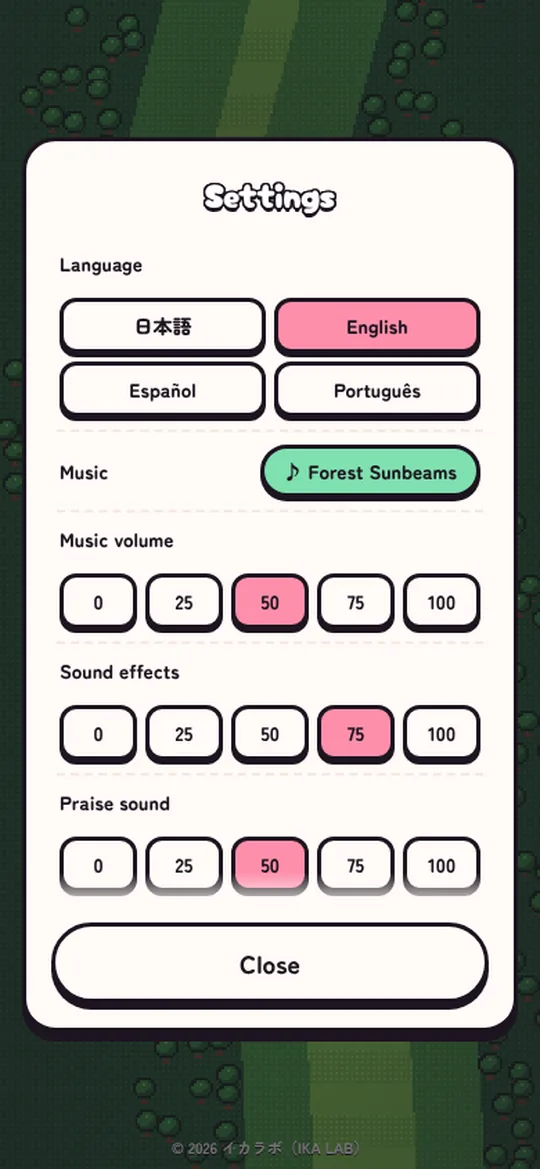
We also check that the game can be played on a computer and that you can get all the way through with a keyboard. Only games that pass all of these checks go up on our website.
We keep improving after release
Even after a game is on our website, we keep fixing the things we notice while playing. For example, in IKA GOLF, we revisited how the game helps you when you get stuck, so now the "Next" button only appears when you're truly stuck.
We also post what we've fixed on this site's News page.